Introduction:
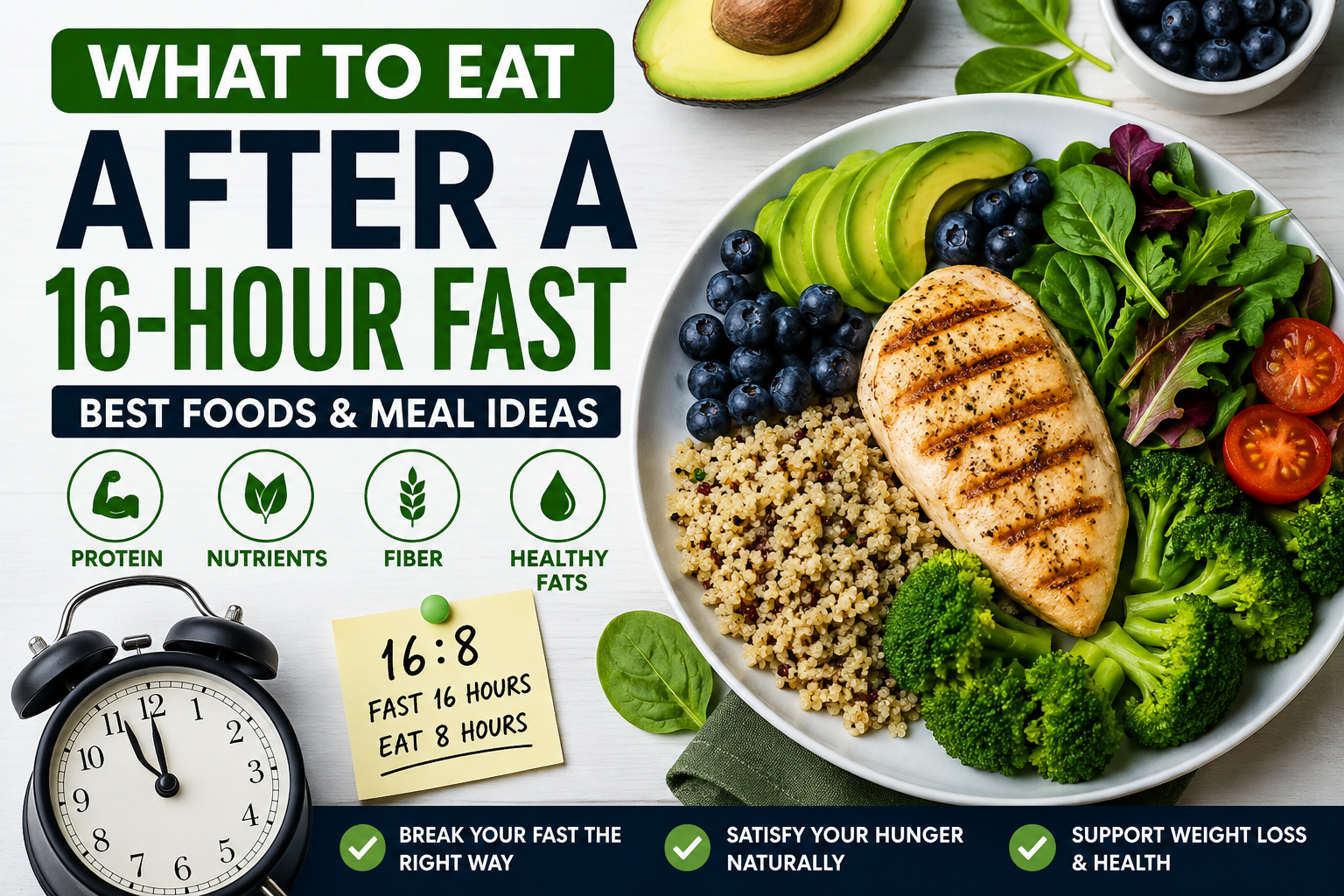
If you’re following a 16:8 intermittent fasting schedule, you may eventually find yourself staring at the clock when your 16-hour fasting window ends and wondering:
What should I eat now?
Fortunately, you don’t need a special food, expensive supplement, or complicated “fast-breaking” routine. Instead, the better approach is to build a normal, balanced meal with a good source of protein, some fiber-rich foods, nutritious carbohydrates, and healthy fats.
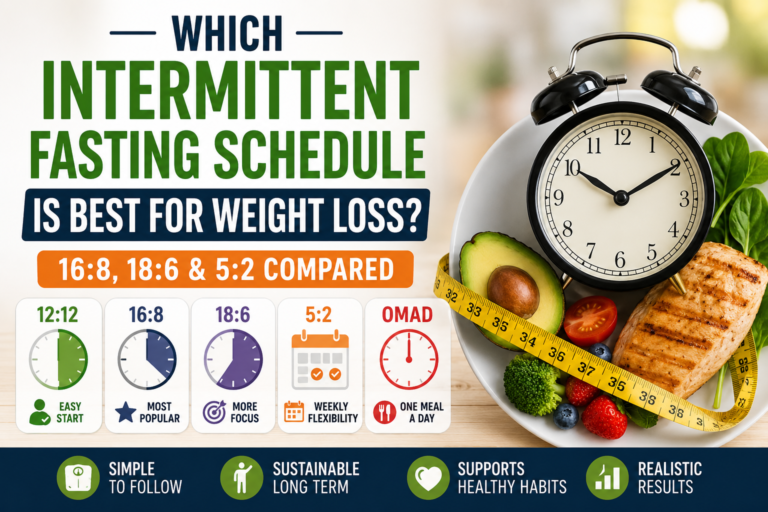
A 16:8 schedule simply means fasting for 16 hours and eating during an 8-hour window. Johns Hopkins Medicine lists 16:8 as one of the common forms of intermittent fasting.
In this guide, we’ll look at what to eat after a 16 hour fast, which foods make practical choices, easy meal combinations, and what you may want to avoid.
Important: This article provides general nutrition information and isn’t a substitute for medical advice. Intermittent fasting isn’t appropriate for everyone. If you have a medical condition, take medication that affects blood sugar, are pregnant or breastfeeding, or have a history of an eating disorder, talk with a qualified healthcare professional before starting or changing a fasting routine.
What Happens When a 16-Hour Fast Ends?
A 16-hour fast is simply a period without food followed by your normal eating window.
For example, you might finish dinner at 8 p.m. and have your next meal at noon the following day. In that situation, your first meal may feel like breakfast even though you’re eating around lunchtime.
However, that doesn’t mean you need to eat a huge meal.
After fasting, it’s easy to think you need to compensate for the hours you haven’t eaten. In reality, there is no need to turn your first meal into a feast.
Instead, think about what will make the meal satisfying and nutritious.
Intermittent fasting changes when you eat, but it doesn’t make food quality irrelevant. Johns Hopkins recommends nutritious choices such as vegetables, healthy fats, lean protein, and complex, minimally refined carbohydrates during eating periods.
Therefore, rather than asking:
“What’s the best food to break my fast?”
try asking:
“What balanced meal will leave me satisfied without overdoing it?”
That simple change in thinking can make intermittent fasting much easier to manage.
What to Eat After a 16-Hour Fast
There isn’t one universally “best” food to eat after a 16-hour fast.
Instead, focus on building a balanced first meal.
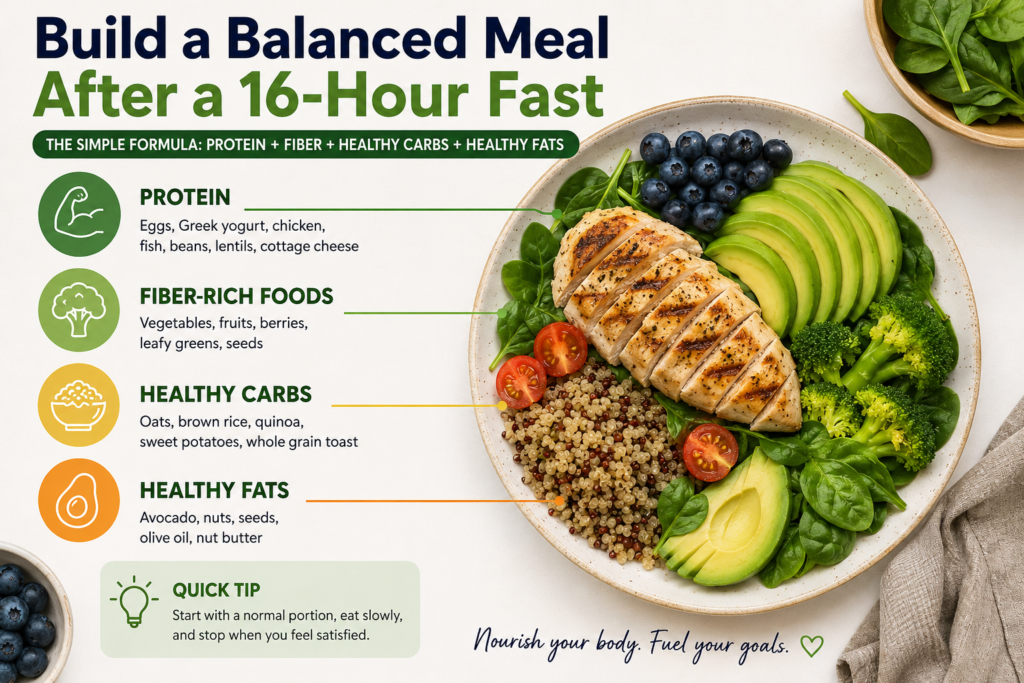
A simple formula is:
Protein + produce + nutritious carbohydrate + healthy fat
You don’t have to include all four in exactly equal amounts. Rather, the idea is to create a meal with a useful mix of nutrients instead of relying mostly on sugary foods or highly processed snacks.
Here are some practical choices.
1. Eggs
Eggs are an easy option if you enjoy savory food.
For example, you could have:
- Scrambled eggs with spinach and tomatoes
- Boiled eggs with whole-grain toast
- A vegetable omelet
- Eggs with avocado and berries
Eggs provide protein, while vegetables, fruit, or whole grains can round out the meal.
Simple combination:
Eggs + avocado + whole-grain toast + berries.
2. Greek Yogurt
Plain Greek yogurt is convenient when you want something quick rather than a large cooked meal.
For instance, try adding:
- Berries
- Chia seeds
- Oats
- Walnuts
- A small amount of banana
Together, these ingredients create a more satisfying combination of protein, fiber, and carbohydrates.
If you choose flavored yogurt, however, check the label because some varieties contain quite a bit of added sugar.
3. Oatmeal
Oatmeal can be a good choice if you prefer a warm first meal.
Rather than eating plain oats alone, add ingredients that make the meal more balanced.
For example:
Oats + Greek yogurt + berries + chia seeds
or:
Oats + banana + walnuts + cinnamon
As a result, you’re getting more than just carbohydrates in your first meal.
4. Whole Fruit
You don’t need to avoid fruit simply because you’ve been fasting.
Berries, apples, oranges, pears, and bananas can all fit into a balanced meal. In addition, whole fruit provides fiber and nutrients that many processed sweet foods don’t provide.
For example:
Greek yogurt + berries + oats
makes a simple first meal.
5. Avocado
Avocado can add healthy unsaturated fat and fiber to your meal.
Try combining it with:
- Eggs
- Whole-grain toast
- Beans
- Tomatoes
- A vegetable omelet
You don’t need a huge serving. Instead, a moderate portion can add flavor and richness without overwhelming the rest of the meal.
6. Chicken
If your first meal happens around lunchtime, there’s no reason it has to look like traditional breakfast.
Grilled chicken can be paired with:
Chicken + roasted vegetables + sweet potato
or:
Chicken + brown rice + vegetables + avocado
This type of meal is simple, filling, and easy to adjust to your normal eating habits.
7. Fish
Fish can also be a practical protein choice after fasting.
For example:
Salmon + sweet potato + green vegetables
or:
Grilled fish + quinoa + mixed vegetables
Fatty fish such as salmon also provides omega-3 fats. Therefore, it can be a useful part of a varied eating pattern.
8. Beans and Lentils
Beans and lentils are useful options if you prefer plant-based meals.
Try:
Lentils + vegetables + brown rice
or:
Black beans + avocado + vegetables + whole-grain tortilla
These foods can provide both protein and fiber. As a result, they can make a meal more satisfying without relying heavily on meat.
9. Sweet Potatoes
Sweet potatoes are a nutritious carbohydrate that can work well alongside protein and vegetables.
For example:
Baked sweet potato + chicken + broccoli
or:
Sweet potato + black beans + avocado
Importantly, there’s no need to automatically eliminate carbohydrates because you’re trying to lose weight.
Instead, consider the overall quality and portion of the meal.
10. Vegetables
Vegetables can add fiber, volume, and nutrients to your first meal.
Some easy choices include:
- Spinach
- Broccoli
- Bell peppers
- Tomatoes
- Carrots
- Zucchini
- Green beans
- Mushrooms
If a large raw salad feels uncomfortable after fasting, choose cooked vegetables instead. That small adjustment can make the meal easier to enjoy.
11. Cottage Cheese
Cottage cheese can be another convenient protein-rich option.
You could combine it with:
- Berries
- Apple slices
- Tomatoes
- Whole-grain toast
- A small amount of nuts or seeds
This is particularly useful when you want something quick and don’t feel like cooking.
12. Nuts and Seeds
Almonds, walnuts, chia seeds, and pumpkin seeds can add healthy fats, fiber, and texture to a meal.
Because nuts and seeds are energy-dense, though, a small serving is usually enough.
For example, add them to yogurt or oatmeal rather than eating a large handful without considering the portion.
13. Whole-Grain Toast
Whole-grain toast can be a simple carbohydrate base for your first meal.
For instance:
Whole-grain toast + eggs + avocado
or:
Whole-grain toast + cottage cheese + berries
It’s quick, flexible, and easy to combine with other nutritious foods.
14. A Balanced Smoothie
A smoothie can work well if you don’t feel like eating a full solid meal immediately.
However, the ingredients matter.
A smoothie made mostly from fruit juice and added sugar is very different from one that contains protein and fiber.
For example:
Greek yogurt + berries + banana + spinach + chia seeds
creates a more balanced combination.
Since CB Shopper already covers weight-loss smoothies, this is also a natural place to explore our related smoothie content.
15. A Simple Balanced Bowl
When you don’t want to think too much about food choices, use this simple formula:
Protein + vegetables or fruit + nutritious carbohydrate + healthy fat
For example:
Chicken + roasted vegetables + brown rice + avocado
or:
Beans + vegetables + sweet potato + avocado
You can change the ingredients according to your preferences, budget, and normal eating habits.
Ultimately, the goal isn’t to follow a rigid menu. Instead, it’s to create a balanced first meal that works for you.
What Is the Best Meal After a 16-Hour Fast?
If you want the short answer, choose a best meal that contains a good protein source, fiber-rich foods, and nutritious carbohydrates and fats in reasonable portions.
For example:
2 eggs + avocado + whole-grain toast + berries
or:
Greek yogurt + oats + berries + chia seeds
Both are practical examples of balanced meals.
More importantly, you don’t need to search for one special food that supposedly makes fasting more effective.
Johns Hopkins recommends an eating pattern that includes vegetables, healthy fats, lean protein, and complex, unrefined carbohydrates.
What to Eat After a 16-Hour Fast for Weight Loss
If weight loss is your goal, you may be tempted to eat as little as possible after fasting.
However, eating too little isn’t automatically better.
Instead, focus on foods that help you build a satisfying meal without relying heavily on highly processed foods.
Here are five simple examples:
High-Protein Breakfast
Eggs + vegetables + whole-grain toast + fruit
Yogurt Bowl
Greek yogurt + berries + oats + chia seeds
Chicken Bowl
Chicken + vegetables + brown rice + avocado
Fish Meal
Salmon + sweet potato + green vegetables
Protein Smoothie
Greek yogurt + berries + banana + spinach + chia seeds
These aren’t “fat-burning meals.”
Rather, they’re simply balanced meal ideas.
That distinction matters because intermittent fasting isn’t a free pass to eat unlimited high-calorie foods during the eating window. Johns Hopkins notes that filling the eating window with high-calorie foods or much larger amounts of food isn’t likely to support weight loss.
What Should You Avoid After a 16-Hour Fast?
You don’t need a long list of forbidden foods.
Instead, think about habits that may make it harder to feel satisfied or manage your overall food intake.
1. Huge Portions
You may feel very hungry when your fast ends.
Even so, you don’t need to eat an enormous meal simply because you haven’t eaten for 16 hours.
Start with a reasonable portion and eat slowly.
2. Sugary Drinks
Soda, sweetened coffee drinks, and other sugary beverages can add calories without providing much nutritional value.
Therefore, water is often a simple choice when you’re thirsty.
3. Highly Processed Snacks
Cookies, chips, pastries, and similar foods aren’t automatically “bad.”
However, they’re often easy to overeat.
If you’re trying to manage your weight, building your first meal around more nutritious foods may make it easier to stay satisfied.
4. Eating Too Quickly
There’s no need to rush because your eating window has opened.
Instead, slow down and give yourself time to enjoy the meal.
What to Eat After a 16-Hour Fast in the Morning
Your first meal doesn’t have to contain traditional breakfast foods.
If your eating window begins around noon, you can eat a meal that looks more like lunch.
For example:
Eggs + vegetables + whole-grain toast
or:
Chicken + vegetables + rice
or:
Greek yogurt + berries + oats
In other words, your body doesn’t require you to eat “breakfast foods” simply because it’s your first meal.
Choose foods that fit your routine and nutritional needs.
Can You Drink a Smoothie After a 16-Hour Fast?
Yes. A smoothie can be part of your first meal.
However, what you put into it matters.
A smoothie made mostly from fruit juice and added sugar isn’t the same as a balanced smoothie containing protein and fiber.
For example:
Greek yogurt + berries + banana + spinach + chia seeds
is a more balanced option.
If smoothies are already part of your weight-loss routine, keeping the ingredients simple and paying attention to portions can make them easier to fit into your overall eating plan.
Can You Eat Eggs After a 16-Hour Fast?
Yes. Eggs can be included in your first meal after fasting.
For a more balanced meal, pair them with vegetables, fruit, or whole grains.
For example:
Eggs + avocado + whole-grain toast + berries
is more complete than eating several eggs by themselves.
Can You Eat Carbs After Fasting?
Yes. You don’t need to eliminate carbohydrates simply because you’re practicing intermittent fasting.
Whole grains, oats, potatoes, sweet potatoes, beans, and fruit can all fit into a balanced eating pattern.
Johns Hopkins specifically includes complex, unrefined carbohydrates such as whole grains among foods that can fit into an intermittent-fasting eating pattern.
Therefore, the better question isn’t:
“Are carbs allowed?”
Instead, ask:
“Which carbohydrate makes sense as part of this meal?”
What About a 24-Hour Fast?
This is an important distinction.
A 16-hour fast and a 24-hour fast shouldn’t automatically be treated as the same thing.
A typical 16:8 routine is a form of daily time-restricted eating. Longer fasting periods are different.
Johns Hopkins notes that 24-, 36-, 48-, and 72-hour fasting periods are not necessarily better and may be dangerous.
Therefore, this article is specifically about breaking a typical 16-hour fast, rather than providing instructions for prolonged fasting.
If you’re considering longer fasts, especially if you have a medical condition or take medication, talk with a healthcare professional first. Also check out this Eat Stop Eat Review – Intermittent Fasting Program
5 Easy Meals to Try After a 16-Hour Fast
If you want simple ideas without overthinking them, start here.
Meal 1
Eggs + avocado + whole-grain toast + berries
Meal 2
Greek yogurt + oats + blueberries + chia seeds
Meal 3
Grilled chicken + brown rice + roasted vegetables
Meal 4
Salmon + sweet potato + green vegetables
Meal 5
Greek yogurt smoothie + banana + berries + spinach + chia seeds
You can adjust these meals according to your food preferences, budget, and normal eating habits.
Most importantly, the goal is flexibility rather than following a rigid meal plan.
A Simple Rule to Remember
If you forget everything else from this article, remember this:
Don’t search for a magic food. Build a balanced meal.
- Start with protein.
- Then add vegetables or fruit.
- Next, choose a nutritious carbohydrate if you want one.
- Finally, add a moderate amount of healthy fat.
- After that, eat slowly and pay attention to how satisfied you feel.
- This approach is much more practical than looking for a special food that supposedly “resets” your metabolism after fasting.
Final Thoughts
Knowing what to eat after a 16 hour fast doesn’t have to be complicated.
You don’t need a detox drink, expensive supplement, or special “fat-burning” food to end your fasting window.
For a typical 16:8 routine, the practical goal is to return to a balanced meal made from nutritious foods.
Eggs, Greek yogurt, vegetables, fruit, whole grains, beans, fish, chicken, nuts, seeds, and other whole foods can all have a place in that meal.
More importantly, if weight loss is your goal, remember that intermittent fasting doesn’t make the rest of your diet irrelevant.
It changes when you eat. What you choose to eat during your eating window still matters.
Therefore, keep it simple.
Build balanced meals.
Eat slowly.
And choose an eating pattern that you can realistically maintain.
Frequently Asked Questions
A balanced meal containing protein, fiber-rich foods, and nutritious carbohydrates is a good place to start. For example, eggs with vegetables and whole-grain toast or Greek yogurt with berries and oats are simple choices.
There isn’t one universally best food. Instead, a balanced meal is generally more useful than focusing on a single food.
Yes. Eggs can be a convenient protein source. Pair them with vegetables, fruit, or whole grains for a more balanced meal.
Yes. Whole fruit can easily fit into a meal after fasting. For example, berries, bananas, apples, and oranges are simple options.
Yes. A smoothie can work well when it includes a protein source and fiber rather than being mostly fruit juice or added sugar.
No. You don’t need to compensate for the hours you spent fasting by eating a huge meal. Instead, a normal portion eaten slowly is a reasonable approach.
Yes. Whole grains, oats, potatoes, sweet potatoes, beans, and fruit can all fit into a balanced eating pattern.
Rather than banning specific foods, consider limiting very large portions, sugary drinks, and highly processed foods if they make it difficult to manage your overall diet.
Coffee can be included in your eating routine. However, large amounts of sugar, syrups, or high-calorie additions can substantially increase the calorie content of the drink.
Eating ends the fasting period, so your body’s fuel use begins shifting as food becomes available. That’s normal and is part of how intermittent fasting works.
No. Intermittent fasting isn’t appropriate for everyone. Johns Hopkins recommends discussing it with a doctor before starting, particularly if you have certain health conditions, take medication that affects blood sugar, or have a history of an eating disorder.
Not necessarily. Longer fasting isn’t automatically better, and Johns Hopkins notes that prolonged fasting periods can carry risks.