
Introduction
Belly fat is one of the most frustrating parts of losing weight. You may notice changes in your face, arms, or legs while the area around your waist seems to change much more slowly.
That naturally leads to a common question: Does intermittent fasting reduce belly fat?
The honest answer is that intermittent fasting may help reduce abdominal fat as part of overall weight and fat loss. However, it does not specifically tell your body to burn fat from your stomach first. It is also not necessarily more effective than other sustainable approaches to reducing calorie intake.
Recent research suggests that some intermittent fasting methods can reduce body weight and measures of abdominal fat, but the results vary between people and fasting approaches. A 2026 systematic review found evidence that some methods, including time-restricted eating and 5:2 fasting, can reduce visceral and subcutaneous fat. At the same time, a 2026 Cochrane review found that intermittent fasting may make little to no difference in weight loss compared with traditional dietary advice.
So, can intermittent fasting help with belly fat? It can be a useful tool for some people, but it is not a magic solution or a spot-reduction method.
If you’re new to fasting, our Intermittent Fasting for Beginners guide explains the basics before you decide whether this eating pattern fits your lifestyle.
What Is Belly Fat?
“Belly fat is a general term for fat stored around the abdomen. It includes different types of body fat, and understanding the difference can help explain why losing it is not always straightforward.
Subcutaneous Fat
Subcutaneous fat is the layer of fat located directly underneath the skin.
It is the soft fat you can usually pinch around your stomach, waist, or hips. While having too much body fat can affect health, subcutaneous fat is different from the deeper fat surrounding your internal organs.
Visceral Fat
Visceral fat is stored deeper inside the abdomen around internal organs.
This type of abdominal fat is more closely associated with health risks. Excess belly fat can increase the risk of conditions such as type 2 diabetes, heart disease, and stroke. Waist circumference is one practical measurement that can help indicate abdominal-fat-related health risk.
This is why reducing excess abdominal fat can be a worthwhile health goal rather than simply a cosmetic goal.
Can Intermittent Fasting Help With Belly Fat?
Yes, intermittent fasting may help reduce belly fat, but mainly as part of overall fat loss.
Intermittent fasting changes when you eat rather than simply telling you which foods to eat. Common approaches include eating within a limited daily window or restricting food intake on certain days.
For some people, this structure makes it easier to eat fewer calories consistently. If your overall calorie intake decreases and you maintain that pattern over time, your body can lose stored fat.
That fat loss may include abdominal fat.
However, intermittent fasting does not guarantee that your waist will shrink faster than other approaches. The 2026 Cochrane review of 22 randomized trials involving 1,995 adults found that intermittent fasting may make little to no difference in weight loss compared with traditional dietary advice.
In other words, intermittent fasting can work, but it is not necessarily better than every other weight-loss approach.
The best approach is usually the one that helps you maintain healthy eating habits over time.
What Does the Research Say About Intermittent Fasting and Belly Fat?
This is where the answer becomes more interesting.
A 2026 systematic review and network meta-analysis examined 24 randomized controlled trials involving adults with overweight or obesity. Researchers compared different intermittent fasting approaches and looked specifically at visceral and subcutaneous abdominal fat.
The review found that some intermittent fasting methods, particularly 5:2 fasting and time-restricted eating, were associated with reductions in visceral and subcutaneous fat compared with control conditions. However, the results did not show that intermittent fasting consistently outperformed conventional calorie restriction.
That distinction matters.
It means you should not think of intermittent fasting as a special diet that automatically melts belly fat. Instead, it can be one way of organizing your eating pattern and managing your overall calorie intake.
A separate 2026 Cochrane review reached a similarly cautious conclusion. After reviewing 22 randomized trials, researchers found that intermittent fasting may make little to no difference in weight loss compared with traditional dietary advice. The review also noted that many studies were relatively small or short, so longer-term evidence is still needed.
What does this mean for you?
If intermittent fasting helps you eat more consistently, reduce unnecessary snacking, and maintain a reasonable calorie intake, it may help with fat loss.
But if another eating pattern works better for you, there is no strong reason to believe that intermittent fasting must be used to lose belly fat.
Does Intermittent Fasting Specifically Target Belly Fat?
No. This is one of the most important things to understand about intermittent fasting for belly fat.
Your body cannot be instructed to burn fat from one specific area simply because you change when you eat.
This is often called spot reduction, and it is not how normal fat loss works.
When you lose body fat, your body draws energy from fat stores throughout the body. The amount and order of fat loss can vary between individuals.
Some people notice changes around their waist relatively early. Others may lose fat from other areas first and see slower changes around the abdomen.
Therefore, intermittent fasting may contribute to overall fat loss, but it cannot guarantee that belly fat will disappear first.
Why Might Intermittent Fasting Help With Fat Loss?
There are several reasons intermittent fasting may work for some people.
It May Reduce Overall Calorie Intake
One of the simplest explanations is that eating within a shorter window may reduce the number of opportunities to eat.
For example, someone who regularly snacks late at night may consume fewer calories simply by ending their eating period earlier.
This does not happen automatically, though. A shorter eating window does not prevent overeating during that window.
It Can Reduce Unplanned Snacking
Frequent snacks, desserts, sugary drinks, and late-night eating can add a significant amount of energy to your daily intake.
Having a clear eating schedule may make it easier for some people to avoid these habits.
It Creates a Simple Eating Structure
Some people find calorie counting difficult to maintain.
Intermittent fasting offers a different type of structure: instead of focusing primarily on counting every calorie, you establish specific periods for eating and fasting.
That simplicity may make the approach easier for certain people to follow.
It May Help Create a Sustainable Calorie Deficit
Fat loss generally requires your body to use more energy than it receives from food over time.
Intermittent fasting can make that easier for some people, but it does not eliminate the importance of overall food intake.
This is one reason we should not think of fasting as a metabolic shortcut.
Which Intermittent Fasting Methods Are Commonly Used?
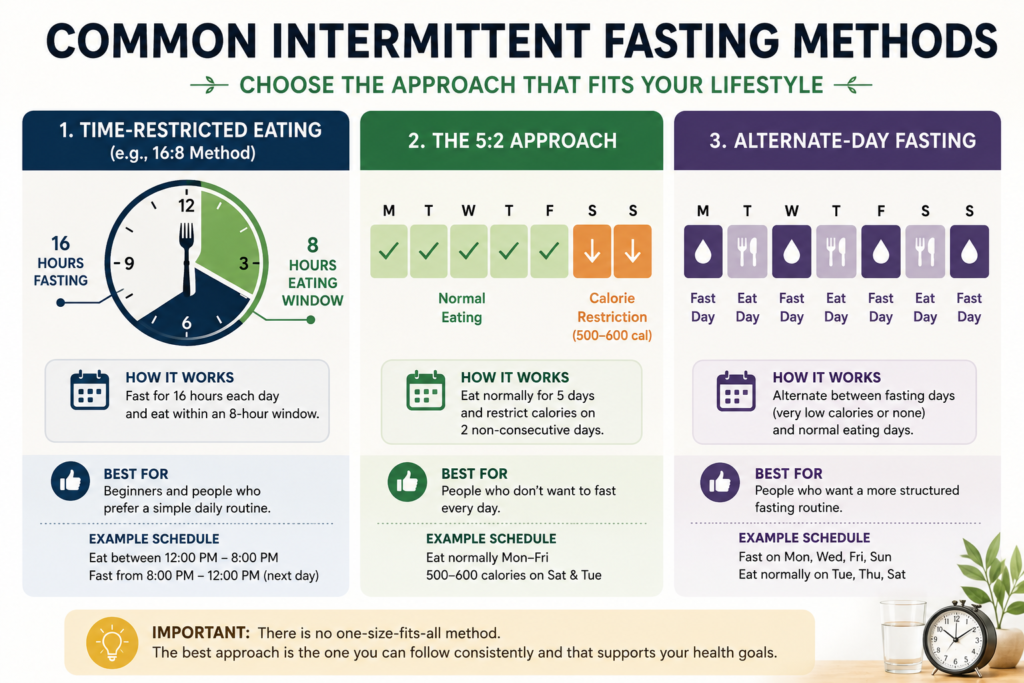
There is no single intermittent fasting schedule that works for everyone.
Time-Restricted Eating
With time-restricted eating, you eat within a specific daily window and fast for the remaining hours.
For example, someone might choose an eating window that fits comfortably into their normal routine.
The goal should not be to choose the most extreme schedule possible. A schedule that disrupts your daily life may be difficult to maintain.
The 5:2 Approach
With the 5:2 approach, people generally eat normally on five days of the week and substantially restrict their calorie intake on two days.
This is different from daily time-restricted eating because the restriction occurs on selected days.
Research has examined 5:2 fasting in relation to body weight and abdominal fat, but that does not mean it is automatically the best method for everyone.
Alternate-Day Fasting
Alternate-day fasting involves alternating between regular eating days and fasting or very-low-calorie days.
This can be more demanding than a simple daily eating window.
If you’re a beginner, there is usually no reason to jump into an aggressive fasting schedule simply because it sounds more effective.
If you’re interested in a structured fasting program rather than creating your own schedule, you can also read our Eat Stop Eat Review to see how that approach works.
What Should You Eat During Your Eating Window?
Your eating window still matters.
Intermittent fasting does not make highly processed foods, sugary drinks, or oversized portions irrelevant.
If your goal is healthy fat loss, build meals around nutritious foods such as:
- Protein-rich foods
- Vegetables
- Fruits
- Whole grains and other high-fiber carbohydrates
- Beans and legumes
- Nuts and seeds
- Healthy sources of dietary fat
Protein and fiber can also help meals feel more satisfying. Fruits can also be part of a balanced eating pattern. If smoothies are part of your routine, see our guide to the Best Fruits for Weight Loss Smoothies for some practical options.
The goal is not to eat as little as possible during your eating window. It is to develop a pattern that provides adequate nutrition while supporting your overall goals.
5 Habits That Can Support Belly Fat Loss
Intermittent fasting is only one part of the bigger picture.
If you want to explore other practical approaches, our guide on How to Lose Belly Fat at Home Without Exercise covers additional lifestyle strategies.
1. Stay Consistent
Changing your fasting schedule every few days can make it difficult to know whether the approach actually works for you.
Choose a realistic routine and give yourself time to establish it.
2. Prioritize Nutritious Foods
A fasting schedule cannot compensate for a consistently poor-quality diet.
Make whole or minimally processed foods the foundation of most meals.
3. Get Enough Protein and Fiber
Protein can help support muscle maintenance during weight loss, while fiber-rich foods can make meals more filling.
Include sources such as vegetables, beans, lentils, fruit, whole grains, eggs, dairy, fish, poultry, or other protein-rich foods that fit your dietary preferences.
4. Stay Physically Active
You do not need an extreme workout routine to support healthy weight management.
Walking, resistance training, cycling, swimming, or other activities you enjoy can complement a healthy eating pattern.
5. Prioritize Sleep
Poor sleep can make healthy eating and weight management more difficult.
A consistent sleep routine is therefore worth paying attention to alongside your fasting and eating habits.
Common Intermittent Fasting Mistakes That Can Slow Progress
Some people try intermittent fasting and become disappointed because they expect immediate results.
Here are some common mistakes to avoid:
- Starting with an unnecessarily extreme fasting schedule
- Eating very large portions during the eating window
- Treating fasting as permission to eat mostly processed foods
- Drinking too little fluid
- Expecting belly fat to disappear quickly
- Ignoring sleep and physical activity
- Changing the fasting schedule constantly
- Giving up before establishing a sustainable routine
Our article on 5 Common Intermittent Fasting Mistakes Beginners Make covers these problems in more detail.
How Long Does It Take to Lose Belly Fat With Intermittent Fasting?
There is no reliable number of days or weeks that guarantees a certain amount of belly-fat loss.
Results depend on many factors, including:
- Starting body composition
- Overall calorie intake
- Food choices
- Physical activity
- Sleep
- Consistency
- Individual differences
It is also possible for body weight to change before noticeable changes occur around the waist.
Instead of asking how quickly you can lose belly fat, it may be more useful to track your progress over several weeks or months.
You can monitor your body weight, waist measurement, energy levels, eating habits, and overall consistency.
Small, sustainable changes are generally more useful than constantly searching for a faster fasting method.
Is Intermittent Fasting Right for Everyone?
No. Intermittent fasting is not appropriate for everyone, and people with certain medical conditions or medication needs should get professional advice before trying it.
For example, people who use insulin or certain diabetes medications may need specific medical guidance because changing food intake can affect blood glucose and medication requirements.
Pregnant or breastfeeding people, people with a current or past eating disorder, and some older adults may also need to avoid fasting or approach it only with professional guidance. NIH guidance specifically recommends talking with a healthcare provider before fasting if you are pregnant or breastfeeding, take diabetes medication, take medication that must be taken with food, or have certain medical conditions.
If you have a medical condition or take prescription medication, talk with your healthcare professional before making a major change to your eating pattern.
This article is intended for general information and should not replace individualized medical advice.
Final Thoughts
So, does intermittent fasting reduce belly fat?
It can help some people reduce abdominal fat as part of overall weight and fat loss. But it is important to keep expectations realistic.
Intermittent fasting is not a magic method for burning stomach fat, and it cannot produce spot reduction. Current evidence also does not show that intermittent fasting is clearly superior to traditional calorie-reduction approaches for weight loss.
What matters most is finding an eating pattern you can follow consistently while getting enough nutrition and maintaining healthy habits.
If intermittent fasting makes that easier for you, it can be a useful tool. If another approach is easier to maintain, there is no need to force yourself to fast.
For beginners who want to understand the basics first, our Intermittent Fasting for Beginners guide is a good place to start.
Frequently Asked Questions
It can help reduce abdominal fat as part of overall fat loss for some people. However, intermittent fasting does not specifically target belly fat, and research does not show that it is always better than conventional calorie restriction.
Yes, it may help. If fasting makes it easier for you to maintain a sustainable eating pattern and appropriate calorie intake, you may lose body fat, including abdominal fat.
16:8 is one form of time-restricted eating. It may support weight and fat loss for some people, but it is not guaranteed to specifically reduce belly fat.
Some research suggests that certain intermittent fasting approaches can reduce visceral fat. However, results vary, and intermittent fasting has not been shown to consistently outperform conventional calorie restriction.
There is no universal timeline. Changes depend on your overall diet, activity, starting body composition, consistency, and other individual factors.
No. Fasting cannot tell your body to remove fat from one specific area. Belly-fat reduction generally occurs as part of overall body-fat loss.
Focus on balanced meals containing protein, vegetables, fruits, fiber-rich carbohydrates, and healthy fats. Your eating window should provide nutritious food rather than becoming an opportunity to overeat.
The 5:2 approach has been studied and may help reduce body fat for some people. However, there is no strong evidence that it is universally better than other sustainable approaches.
You can lose body fat without a formal exercise program if your overall energy intake supports fat loss. However, physical activity can provide additional health and fitness benefits and may help support long-term weight management.
No. People with certain medical conditions, medication requirements, pregnancy or breastfeeding, or a history of eating disorders may need to avoid fasting or seek professional guidance first.