Affiliate Disclosure: This article may contain affiliate links. If you purchase through these links, we may earn a small commission at no extra cost to you. Thank you for your support.
Introduction
The Smoothie Diet has become a popular option for people looking to lose weight and improve their eating habits. Many people are attracted to the program because it focuses on fruits, vegetables, and nutrient-rich ingredients that can be prepared quickly at home.
But before starting any weight loss program, it’s natural to ask an important question:
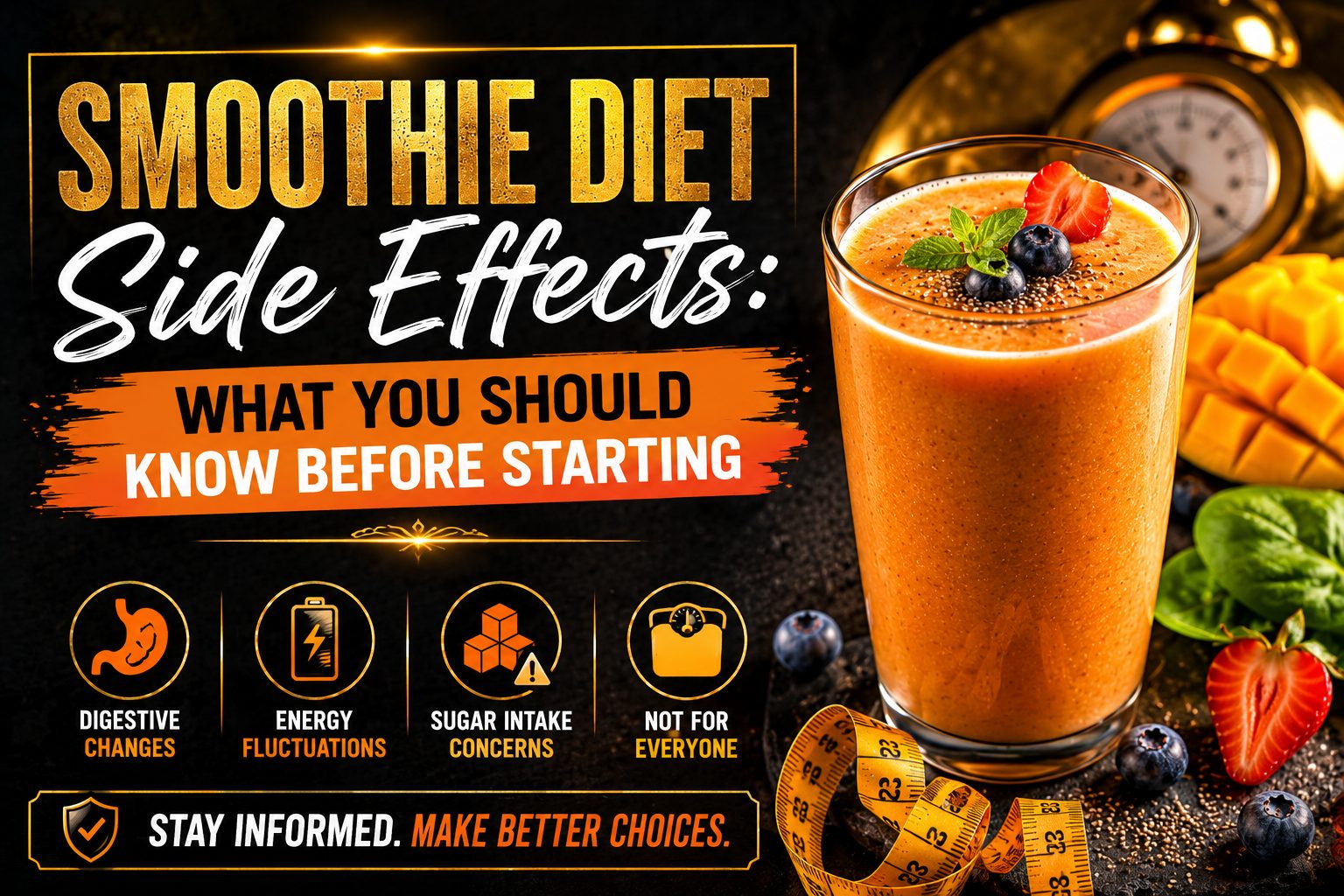
Are there any Smoothie Diet side effects?
The good news is that most people can safely enjoy smoothies as part of a balanced diet. However, just like any major change in eating habits, there can be some temporary effects that are worth understanding.
In this article, we’ll take an honest look at potential smoothie diet side effects, who should be cautious, and how to make the transition as smooth as possible.
Why Some People Experience Side Effects
Whenever you make a significant change to your diet, your body may need time to adjust.
For example, someone who regularly eats processed foods, sugary snacks, and fast food may notice changes when switching to a healthier eating pattern.
These changes are not always harmful. In many cases, they are simply signs that your body is adapting to a new routine.
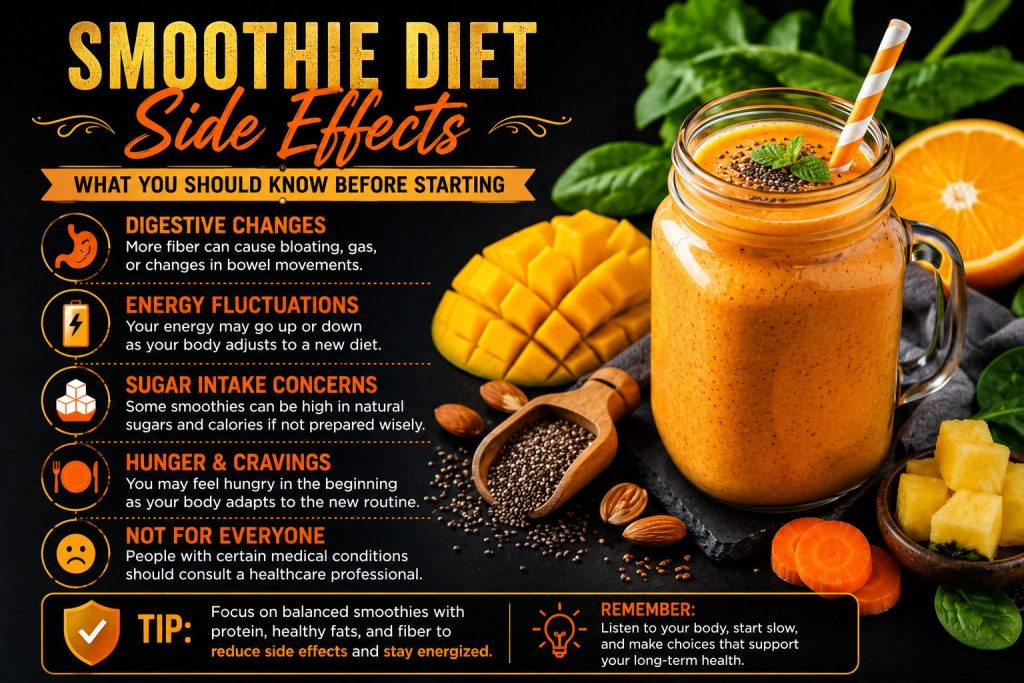
1. Increased Hunger During the First Few Days
One of the most common concerns when starting the Smoothie Diet is hunger.
If you’re used to eating large meals throughout the day, replacing some meals with smoothies may feel different at first.
Some people report feeling hungry between meals during the first few days.
This doesn’t necessarily mean the program isn’t working. It often takes time for the body to adjust to a new eating pattern.
Adding ingredients like protein powder, Greek yogurt, chia seeds, or oats may help improve fullness and reduce hunger.
2. Digestive Changes
Another possible smoothie diet side effect is temporary digestive discomfort.
Since smoothies often contain more fruits, vegetables, and fiber than a typical diet, some people may experience:
- Bloating
- Mild gas
- Changes in bowel movements
In most cases, these symptoms are temporary and improve as the body adapts to the increased fiber intake. Drinking enough water can also help.
3. Energy Fluctuations
Some people notice changes in their energy levels when starting a weight loss smoothie program.
For some, energy improves because they are eating more nutritious foods.
Others may feel slightly tired during the adjustment period, especially if they significantly reduce calories compared to their previous diet.
This is one reason why it’s important to choose balanced smoothies rather than relying only on fruit.
Including protein, healthy fats, and fiber can help support more stable energy levels.
4. Sugar Intake Can Add Up
Many people assume all smoothies are healthy. Unfortunately, that’s not always true.
A smoothie made with large amounts of fruit juice, sweetened yogurt, syrups, and added sugars can contain a surprising number of calories.
This isn’t necessarily a side effect of the Smoothie Diet itself, but it can become a problem if ingredients are not chosen carefully.
When preparing smoothies, focus on whole fruits and limit added sugars whenever possible.
5. Not Everyone Enjoys Meal Replacement Smoothies
Some people simply prefer eating solid foods.
Even when the smoothie is nutritious and filling, they may miss the experience of chewing a regular meal.
This isn’t a health risk, but it’s something worth considering before starting the program.
A weight loss plan is much easier to follow when it fits your personal preferences and lifestyle.
Is the Smoothie Diet Safe?
For most healthy adults, the answer is yes.
The program focuses on ingredients that are commonly recommended as part of a healthy diet, including:
- Fruits
- Vegetables
- Nuts and seeds
- Protein-rich foods
- Fiber-rich ingredients
However, people with certain medical conditions should always consult a healthcare professional before making significant dietary changes.
This is especially important for individuals who have:
- Diabetes
- Kidney disease
- Digestive disorders
- Food allergies
When in doubt, professional guidance is always the safest approach.
How to Reduce Smoothie Diet Risks
Although serious smoothie diet risks are uncommon, there are several simple ways to make the experience more comfortable.
Increase Fiber Gradually
If you’re not used to eating a lot of fruits and vegetables, start slowly. A gradual increase in fiber may help reduce digestive discomfort.
Include Protein
Protein can improve fullness and support muscle maintenance during weight loss.
Good options include:
- Greek yogurt
- Protein powder
- Unsweetened soy milk
- Cottage cheese
Stay Hydrated
Many people underestimate the importance of water. Drinking enough fluids may help digestion and overall well-being.
Focus on Balanced Nutrition
A healthy smoothie diet should include more than just fruit.
Aim for a balance of:
- Protein
- Fiber
- Healthy fats
- Nutrient-rich ingredients
What Most People Get Wrong
One mistake people make when starting the Smoothie Diet is expecting instant results. Weight loss takes time.
The goal should be building healthier habits rather than chasing quick fixes.
Another common mistake is assuming that every smoothie supports weight loss. The ingredients matter.
A well-made smoothie can support your goals, while a high-calorie smoothie may work against them.
My Thoughts
When people ask about smoothie diet side effects, they are often worried about serious problems.
For most healthy individuals, the effects are usually mild and temporary.
Increased hunger, digestive changes, or energy fluctuations can happen during the adjustment period, but these often improve within a short time.
The key is to create balanced smoothies and approach weight loss with realistic expectations.
Final Verdict
The Smoothie Diet can be a convenient way to increase your intake of fruits, vegetables, and other nutritious ingredients.
While some people may experience temporary side effects such as hunger, bloating, or changes in energy levels, these are often related to the body’s adjustment process rather than the program itself.
If you’re considering starting the program, focus on balanced nutrition, proper hydration, and consistency.
For a complete breakdown of how the program works, be sure to read our detailed Smoothie Diet Review.
You may also find our article Can Smoothies Help You Lose Weight? helpful if you’re still deciding whether a smoothie-based approach is right for your goals.