Introduction
Have you ever picked up your phone and then forgotten why you needed it? Or walked into another room only to stand there wondering what you came for?
If this sounds familiar, you’re not alone.
Almost everyone forgets things from time to time. It can be frustrating, especially when it happens during an important conversation, at work, or while trying to remember someone’s name. Many people immediately start worrying and ask themselves, “Why do we forget things?” or even, “Why am I so forgetful?”
The good news is that occasional forgetfulness is usually a normal part of life. Your brain processes thousands of pieces of information every day. It simply can’t store every detail forever, so it naturally decides what is worth keeping and what can be forgotten.
However, frequent memory problems shouldn’t always be ignored. Poor sleep, stress, unhealthy eating habits, vitamin deficiencies, certain medications, and even dehydration can all affect how well your brain works.
Understanding the common causes of memory problems is the first step toward protecting your brain health. In many cases, simple lifestyle changes can improve focus, concentration, and memory without complicated solutions.
In this guide, you’ll learn how memory works, the most common reasons people become forgetful, practical ways to keep your brain healthy, and when it’s time to speak with a healthcare professional.
How Does Memory Actually Work?
Before looking at the reasons we forget things, it helps to understand how memory works.
Think of your brain as a huge library. Every day, your eyes, ears, and other senses collect information. Your brain then decides which information is important enough to store.
Memory usually works in three simple stages.
1. Encoding
This is when your brain receives new information. For example, when someone introduces themselves, your brain begins processing their name. If you’re distracted during the conversation, the information may never be stored properly. This is one reason people often forget names only seconds after hearing them.
2. Storage
Once information has been encoded, your brain stores it. Some memories stay for only a few seconds, while others can last for years. The quality of your sleep, your level of attention, and your overall health all influence how well memories are stored.
3. Retrieval
Retrieval is the process of remembering information later. Sometimes the memory is still there, but your brain has trouble finding it quickly. This explains why a forgotten name suddenly pops into your head several hours later.
Different Types of Memory
Not all memories are the same. Your brain uses different systems for different kinds of information.
Short-Term Memory
Short-term memory holds information for a brief period.
For example:
- A phone number before writing it down
- A shopping item you just remembered
- Directions someone gave you a minute ago
Without attention, these memories disappear quickly.
Long-Term Memory
Long-term memory stores information for months or even decades.
Examples include:
- Childhood memories
- Your home address
- Riding a bicycle
- Your first job
These memories are much more stable.
Working Memory
Working memory helps you use information immediately.
For example:
- Solving a math problem
- Following cooking instructions
- Planning your daily schedule
- Reading while remembering the previous sentence
Working memory becomes less effective when you’re stressed, tired, or distracted.
Is It Normal to Forget Things?
Yes. In fact, forgetting small things every now and then is completely normal.
You might forget:
- Where you left your keys
- Someone’s name
- An appointment
- Why you entered a room
- A word during a conversation
These situations usually aren’t signs of a serious problem. Your brain constantly filters information. It removes details that don’t seem important so it can focus on what matters most.
However, if forgetfulness becomes frequent, starts affecting your work or daily life, or gets worse over time, it’s worth paying closer attention.
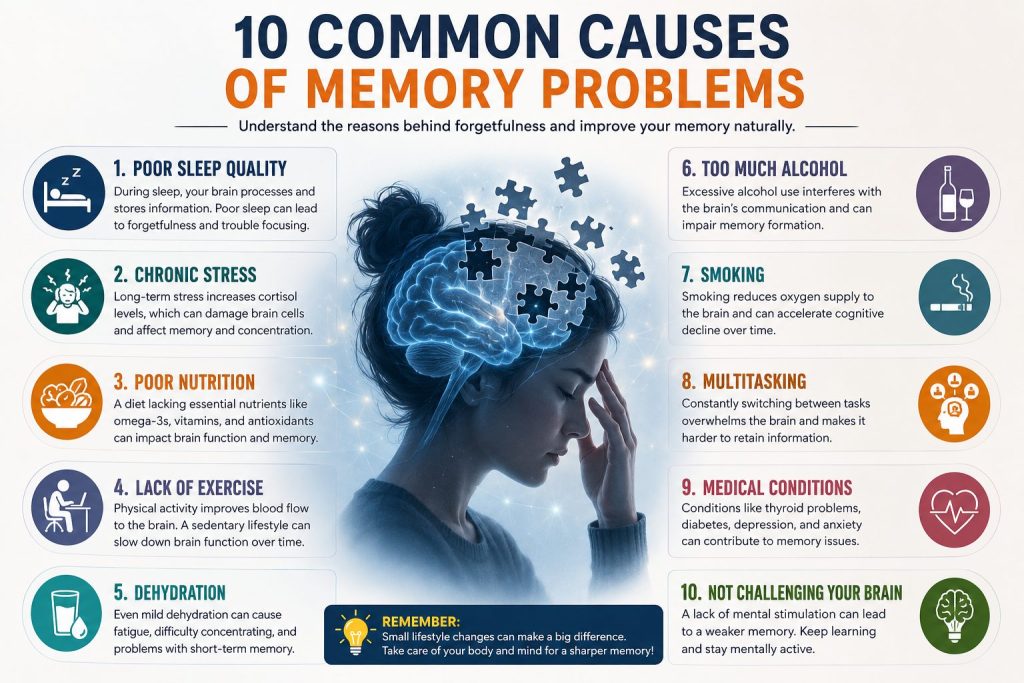
The next section explains the most common reasons this can happen.
1. Poor Sleep Is One of the Biggest Memory Killers
Sleep is far more important than many people realize. While you’re sleeping, your brain isn’t simply resting. It’s actively organizing information, strengthening memories, and removing unnecessary waste products that build up during the day.
When you don’t get enough sleep, this process becomes less effective. As a result, you may notice:
- Trouble concentrating
- Difficulty remembering conversations
- Slower thinking
- Reduced attention span
- Feeling mentally exhausted
Many people who ask, “Why am I so forgetful?”, discover that poor sleep is one of the biggest reasons.
Most healthy adults should aim for 7–9 hours of quality sleep each night.
Simple habits like avoiding caffeine late in the day, limiting screen time before bed, and keeping a regular sleep schedule can make a noticeable difference.
2. Chronic Stress Can Make You More Forgetful
Life can be stressful. Deadlines at work, family responsibilities, financial worries, and everyday challenges all place pressure on your mind.
While a little stress is normal, ongoing stress can affect how well your brain works.
When you’re under stress for a long time, your body releases a hormone called cortisol. In small amounts, cortisol helps you respond to difficult situations. However, when cortisol stays high for weeks or months, it can make it harder to concentrate, learn new information, and remember everyday details.
This is why many people notice that they become forgetful during stressful periods of life. You might experience:
- Forgetting appointments
- Losing track of conversations
- Difficulty focusing on simple tasks
- Feeling mentally exhausted
- Trouble remembering names or dates
If you’ve been asking yourself, “Why do we forget things even when we’re trying to pay attention?”, stress could be one of the answers.
Finding healthy ways to manage stress can improve both your mood and your memory. Even simple activities like walking, deep breathing, reading, or spending time outdoors can help calm your mind.
3.Poor Nutrition Can Affect Brain Health
Your brain needs the right nutrients to perform at its best.
Just like a car can’t run properly without good fuel, your brain struggles when it doesn’t receive enough vitamins, minerals, healthy fats, and protein.
Eating too many processed foods, sugary snacks, and fast food may leave you feeling tired and mentally sluggish. A healthy eating pattern should include foods rich in:
- Omega-3 fatty acids
- Vitamin B12
- Vitamin D
- Antioxidants
- Magnesium
- Protein
These nutrients support healthy brain function and may help you improve memory naturally over time.
If your goal is to build healthier eating habits for both your body and your mind, you can also read our Burn The Fat Guide to Flexible Meal Planning Review, where we discuss a flexible approach to creating balanced meals that fit everyday life.
4. Lack of Physical Activity
Many people think exercise only benefits the heart and muscles. In reality, your brain also benefits from regular movement.
Physical activity improves blood circulation, allowing more oxygen and nutrients to reach the brain. It may also support the growth of new brain cells and strengthen connections between existing ones.
You don’t have to spend hours in the gym. Simple activities such as:
- Walking
- Cycling
- Swimming
- Yoga
- Dancing
The above mentioned all can support better brain health when done regularly. Even a 30-minute walk most days of the week can help improve focus and mental clarity.
5. Multitasking Reduces Your Ability to Remember
Modern life encourages multitasking. You might answer emails while watching TV, check your phone during meetings, or switch between several tasks every few minutes.
Although it feels productive, your brain isn’t truly doing multiple tasks at once. Instead, it’s rapidly switching its attention. Every switch increases the chance of missing important information.
For example:
- Reading while scrolling social media
- Listening to someone while replying to messages
- Watching videos while studying
These habits make it harder for your brain to store information properly. Sometimes memory problems aren’t caused by poor memory at all—they’re caused by poor attention. Focusing on one task at a time gives your brain a much better chance of remembering information later.
6. Normal Aging
As we grow older, our brains naturally change. It may take a little longer to remember names, learn new technology, or recall where you placed your glasses. This type of forgetfulness is usually a normal part of aging. Many older adults continue to live active, independent lives despite occasionally forgetting small details.
However, memory loss that becomes severe, progresses quickly, or interferes with daily life should always be discussed with a healthcare professional. Normal aging is not the same as serious memory disorders.
7. Vitamin Deficiencies
Certain vitamins play an important role in keeping your brain healthy. One of the most well-known is vitamin B12.
Low levels of vitamin B12 may lead to:
- Poor concentration
- Brain fog
- Fatigue
- Tingling in the hands or feet
- Memory problems
Other nutrients, including vitamin D, folate, and iron, also contribute to healthy brain function.
If you suspect a nutritional deficiency, it’s best to speak with a healthcare professional rather than starting supplements on your own.
8. Certain Medications
Some medications can affect memory as a side effect.
Examples may include certain medicines used for:
- Allergies
- Anxiety
- Sleep problems
- Pain management
This doesn’t mean you should stop taking prescribed medication. Instead, if you notice new memory problems after starting a medication, talk with your doctor or pharmacist. They can review your treatment and discuss possible alternatives if appropriate.
9. Anxiety and Depression
Mental health and brain health are closely connected. People living with anxiety or depression often find it difficult to concentrate.
When your mind is constantly occupied with worry or low mood, remembering everyday information becomes much harder.
You may notice:
- Forgetting simple tasks
- Losing focus during conversations
- Trouble making decisions
- Difficulty finishing work
Improving your mental well-being often helps improve memory at the same time.
10. Not Challenging Your Brain
Your brain works best when it’s active. Just as your muscles become stronger through exercise, your brain benefits from regular mental challenges.
Some simple ways to keep your mind engaged include:
- Reading books
- Learning a new language
- Solving crossword puzzles
- Playing chess
- Learning a musical instrument
- Trying a new hobby
Keeping your brain active throughout life is one of the easiest ways to improve memory naturally and maintain good mental performance.
If you’re looking for more practical lifestyle tips, don’t miss our guide on 7 Natural Ways to Improve Memory and Focus Without Medication, where we share simple habits that can easily fit into your daily routine.
Daily Habits That May Be Hurting Your Memory
Sometimes, it’s not a medical condition that’s affecting your memory. Instead, everyday habits can slowly reduce your ability to focus and remember information.
Here are a few habits worth paying attention to:
Spending Too Much Time on Screens
Phones, tablets, and computers are part of daily life, but constantly switching between apps, emails, and social media can overload your brain.
Taking short breaks and reducing unnecessary screen time can help you stay more focused.
Not Drinking Enough Water
Your brain is made up of about 70% water. Even mild dehydration can leave you feeling tired, distracted, and less able to concentrate.
Try to drink water regularly throughout the day, especially during hot weather or after exercise.
Drinking Too Much Alcohol
Occasional drinking may not cause long-term problems for most people, but heavy or frequent alcohol use can interfere with memory and learning.
Moderation is important for both your brain and your overall health.
Smoking
Smoking affects blood circulation throughout the body, including the brain. Over time, this may contribute to reduced cognitive function.
Quitting smoking benefits not only your memory but also your heart, lungs, and general well-being.
Living With Constant Stress
As discussed earlier, chronic stress can make it difficult for your brain to store and retrieve information. Finding healthy ways to relax is just as important as eating well and exercising.
Foods That Support Brain Health
A balanced diet can help keep your brain working efficiently. While no single food can guarantee a perfect memory, regularly eating nutrient-rich foods supports healthy brain function.
Some excellent choices include:
- Fatty fish such as salmon and sardines
- Blueberries and other berries
- Leafy green vegetables
- Walnuts and almonds
- Eggs
- Whole grains
- Olive oil
- Avocados
These foods provide healthy fats, vitamins, minerals, and antioxidants that support both your brain and your body. Instead of focusing on one “superfood,” aim for a balanced eating pattern that includes a variety of nutritious foods.
A Simple 7-Day Memory Improvement Challenge
If you want to improve your brain health, start with small changes. Here’s a simple one-week challenge you can try.
Day 1
Go to bed 30 minutes earlier than usual.
Day 2
Take a 30-minute walk outdoors.
Day 3
Read a book for 20 minutes instead of scrolling through social media.
Day 4
Drink enough water throughout the day.
Day 5
Learn something new, such as a recipe, a few words in another language, or a new skill.
Day 6
Practice five to ten minutes of deep breathing or meditation.
Day 7
Spend time with family or friends and enjoy meaningful conversation without checking your phone.
These simple habits may not transform your memory overnight, but they can help build a healthier routine over time.
When Should You See a Doctor?
Occasional forgetfulness is usually nothing to worry about. However, it’s a good idea to seek medical advice if you notice that memory problems are:
- Becoming more frequent
- Affecting your work or daily life
- Causing confusion in familiar places
- Making it difficult to complete everyday tasks
- Happening alongside changes in personality or behavior
A healthcare professional can evaluate your symptoms, identify possible causes, and recommend appropriate treatment if needed.
Final Thoughts
If you’ve ever wondered, “Why do we forget things?”, remember that occasional forgetfulness is a normal part of life.
In many cases, the answer isn’t a serious illness. Poor sleep, ongoing stress, unhealthy eating habits, lack of exercise, dehydration, and constant distractions are some of the **common causes of memory problems**.
The encouraging news is that many of these factors can be improved with small, consistent lifestyle changes.
Getting enough sleep, eating nutritious foods, staying active, managing stress, and keeping your brain engaged are all practical ways to improve memory naturally.
If you’re looking for additional ways to support your brain health, some people also explore structured brain-training programs. We’ve taken an in-depth look at one popular option in our Neuro Energizer Review, where we explain how it works, its pros and cons, and who it may be suitable for.
Remember, this article is for educational purposes only. If your memory problems are severe, getting worse, or affecting your daily life, it’s important to consult a qualified healthcare professional.
Frequently Asked Questions
As we age, it may take a little longer to recall information. Mild forgetfulness is often a normal part of aging, but significant memory loss should be evaluated by a healthcare professional.
Young adults can experience forgetfulness due to stress, poor sleep, lack of focus, nutritional deficiencies, anxiety, or an unhealthy lifestyle.
Yes. Sleep plays an important role in organizing and storing memories. Poor sleep can make it harder to learn, concentrate, and remember information.
Foods such as fatty fish, berries, leafy greens, eggs, nuts, whole grains, and olive oil provide nutrients that support healthy brain function.
Yes. Long-term stress may interfere with concentration and make it more difficult to remember information.
Yes. Occasionally forgetting names is common, especially when you’re distracted or meeting many new people.
Regular physical activity supports healthy blood flow to the brain and may help maintain memory and concentration over time.
Yes. Even mild dehydration can reduce concentration and make you feel mentally tired.
You should speak with a healthcare professional if memory problems become frequent, worsen over time, or interfere with your daily life.
Many people can support better brain health through good sleep, balanced nutrition, regular exercise, stress management, mental stimulation, and healthy daily habits.