Introduction
Have you ever walked into a room and forgotten why you were there? Or struggled to remember someone’s name even though you met them only a few minutes ago? Occasional forgetfulness happens to everyone, but the good news is that your daily habits can play an important role in supporting your brain.
Just like the rest of your body, your brain needs the right nutrients to function at its best. Everyday foods provide energy, vitamins, minerals, healthy fats, and antioxidants that help keep brain cells healthy and support communication between them.. Over time, a balanced diet may contribute to better memory, improved concentration, and overall cognitive health.
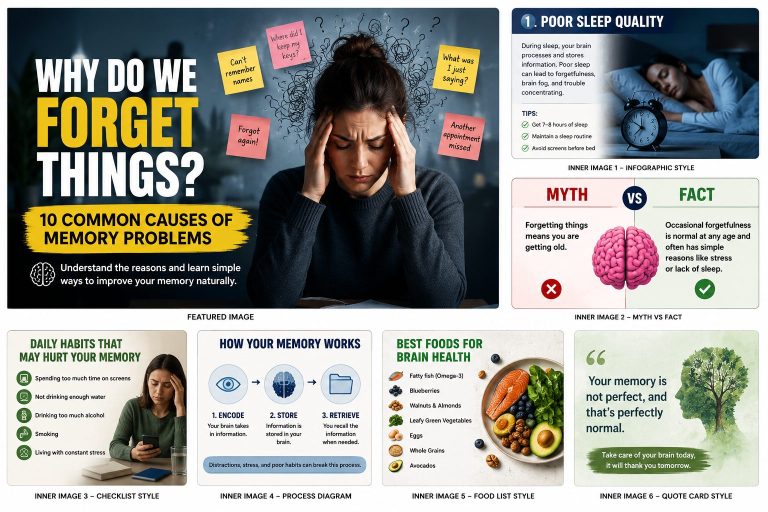
If you’ve already read our guide on Why Do We Forget Things? Common Causes of Memory Problems, you’ll know that memory issues can have many different causes, including stress, lack of sleep, dehydration, certain medications, and nutritional deficiencies. While food isn’t a miracle cure, choosing nutrient-rich meals is one practical way to support your brain as part of a healthy lifestyle.
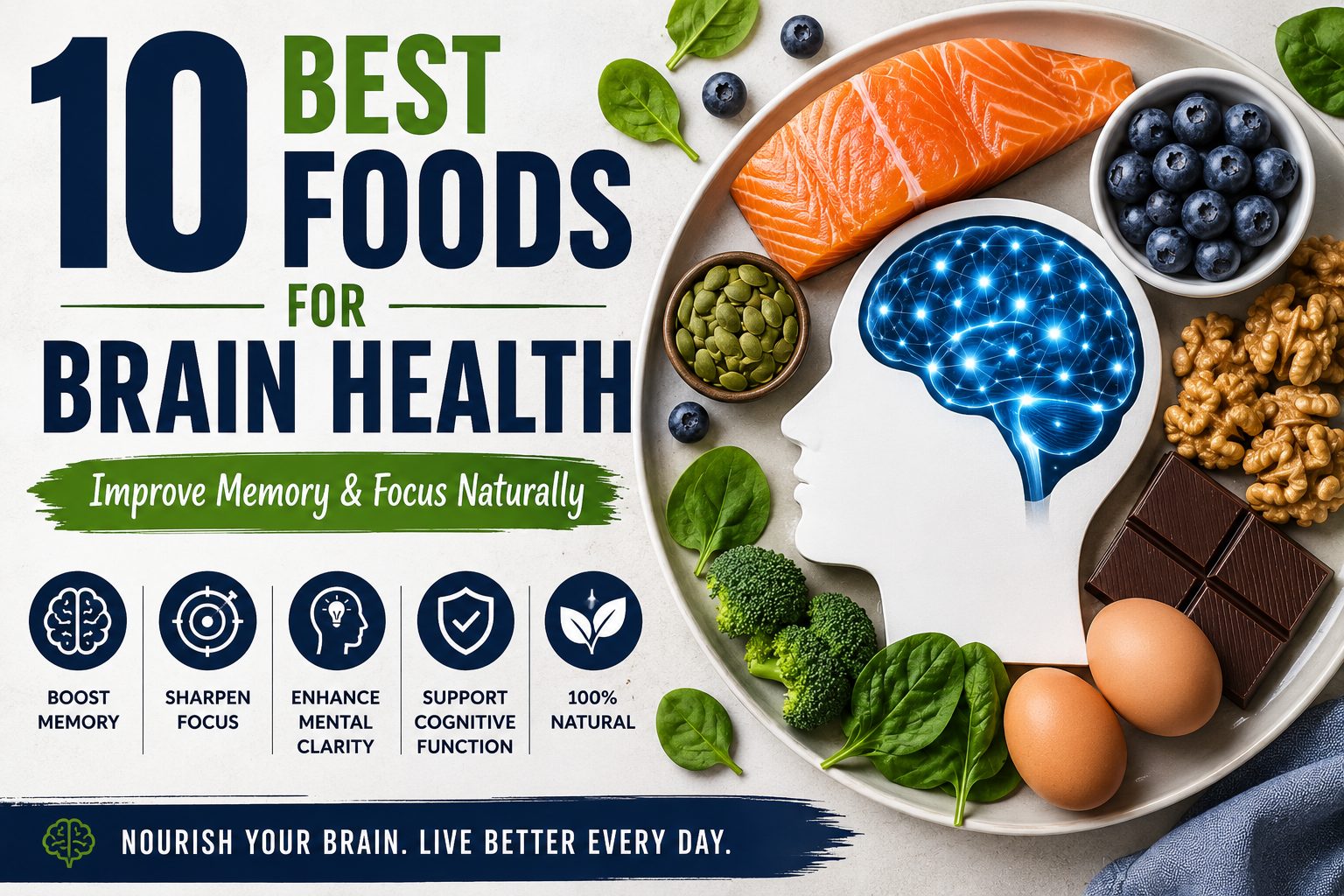
In this article, we’ll explore the best foods for brain health, explain why they matter, and share simple ways to include them in your everyday diet.
How Does Food Affect Brain Health?
Your brain may only account for about 2% of your body weight, but it uses around 20% of the energy your body produces. That means it constantly needs a steady supply of nutrients to work efficiently.
A balanced diet supports your brain in several ways:
- It provides healthy fats that help build and maintain brain cells.
- It supplies antioxidants that help protect cells from everyday oxidative stress.
- It delivers vitamins and minerals involved in normal brain function.
- It supports healthy blood flow, helping oxygen and nutrients reach the brain.
No single food can transform your memory overnight. Instead, it’s your overall eating pattern that makes the biggest difference over time.
1.Fatty Fish:
When people talk about the best foods for brain health, fatty fish is often at the top of the list.
Fish such as:
- Salmon
- Sardines
- Mackerel
- Trout
- Herring
These fish are rich in omega-3 fatty acids, particularly DHA, which is an important structural component of the brain. Why it’s good for your brain. Omega-3 fats contribute to the normal structure and function of brain cells. They are also associated with maintaining normal cognitive function as part of a balanced diet.
Easy ways to eat more fatty fish:
- Grill salmon for dinner.
- Sardines also taste great on whole-grain toast.
- Tuna can be added to fresh salads (choose varieties lower in mercury and enjoy in moderation).
- Try to include one or two servings of oily fish each week if it fits your dietary preferences.
2. Blueberries:
Blueberries are often called a “superfood,” and for good reason. These small berries are packed with natural plant compounds called anthocyanins, which give them their deep blue color.
Why they’re considered one of the best foods for brain health. Blueberries provide antioxidants that help protect cells from oxidative stress. They also make a delicious, nutrient-rich addition to a balanced eating pattern.
Simple ways to enjoy blueberries:
- Sprinkle blueberries over your morning oatmeal.
- Blend them into a refreshing smoothie.
- They also pair well with plain yogurt.
- Another simple option is enjoying them as a healthy snack.
3. Walnuts
Among all nuts, walnuts stand out because they contain healthy fats, vitamin E, and plant-based omega-3 fats. Many people looking for foods that improve memory include walnuts as part of their regular diet because they’re easy to add to meals and snacks.
Brain-supporting nutrients.
Walnuts contain:
- Healthy unsaturated fats
- Vitamin E
- Magnesium
- Copper
- Polyphenols
- How to include walnuts
- Sprinkle chopped walnuts over salads.
- Mix them into oatmeal.
- Add them to homemade trail mix.
- Enjoy a small handful as an afternoon snack.
4. Eggs
Eggs are one of the most affordable and nutritious brain healthy foods available.
Eggs are a good source of:
- Choline
- Vitamin B12
- Folate
- Protein
Choline is a nutrient involved in several important functions in the body, including normal brain function.
Easy meal ideas
- Boiled eggs
- Vegetable omelets
- Egg sandwiches on whole-grain bread
- Breakfast wraps
5. Leafy Green Vegetables
Leafy greens deserve a permanent place on your plate.
Examples include:
- Spinach
- Kale
- Swiss chard
- Collard greens
Vegetables provide vitamins, minerals, and antioxidants that support overall health. Key nutrients includes,
- Vitamin K
- Folate
- Lutein
- Beta-carotene
- Simple ways to eat more greens
- Add spinach to smoothies.
- Toss kale into soups.
- Include leafy greens in salads.
- Stir them into pasta dishes.
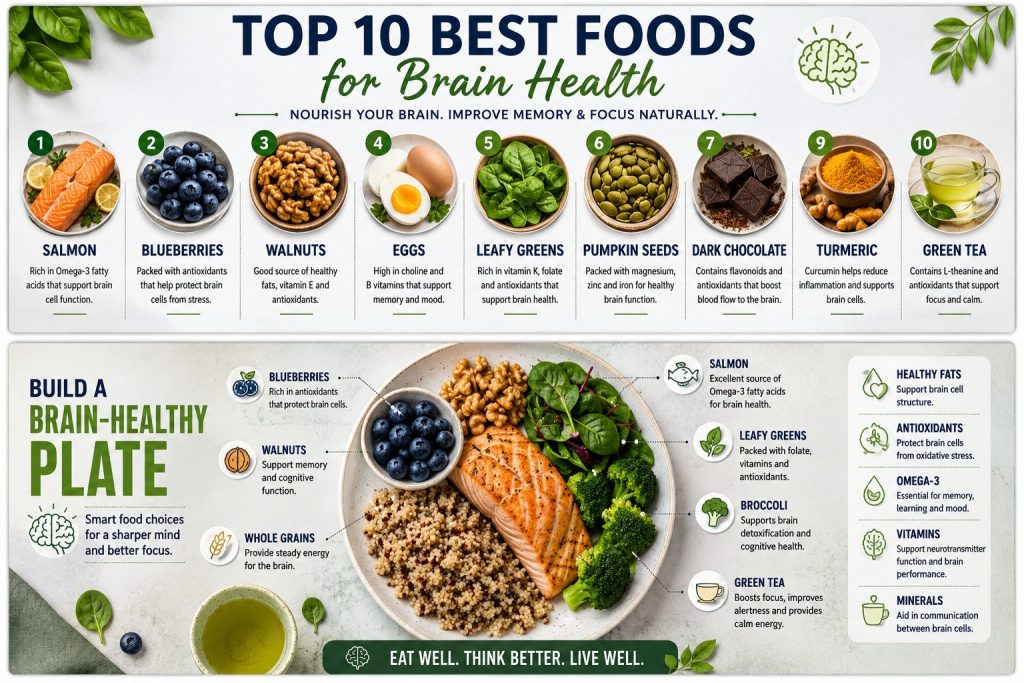
6. Pumpkin Seeds
Pumpkin seeds may be small, but they’re packed with nutrients that support overall health, including nutrients that are important for normal brain function.
Pumpkin seeds contain a variety of vitamins and minerals, including magnesium, zinc, iron, and copper, all of which play different roles in the body.
Pumpkin seeds are a good source of:
- Magnesium
- Zinc
- Iron
- Copper
- Healthy fats
Together, these nutrients help support normal nerve function, energy production, and overall health.. Including a variety of nutrient-rich foods like pumpkin seeds in your diet can contribute to a balanced eating pattern that supports your brain.
Easy ways to eat pumpkin seeds
- Sprinkle pumpkin seeds over salads.
- Yogurt or oatmeal tastes great with a handful of seeds.
- Homemade granola is another delicious option.
- They’re also perfect as a quick snack.
7. Dark Chocolate
Good news for chocolate lovers! Dark chocolate can be part of a healthy diet when enjoyed in moderation.
Unlike milk chocolate, dark chocolate contains more cocoa and is naturally rich in plant compounds called flavonoids.
Why it’s considered one of the best foods for brain health?
Dark chocolate contains:
- Flavonoids
- Iron
- Magnesium
- Antioxidants
Flavonoids are naturally occurring compounds found in many plant foods. As part of a balanced diet, foods rich in these compounds may support overall health. Choose wisely for the best nutritional value:
- Choose dark chocolate with at least 70% cocoa.
- Keep portions moderate.
- Avoid varieties high in added sugar.
Healthy serving idea. Enjoy one or two small squares after dinner instead of sugary desserts.
8. Turmeric
Turmeric is a bright yellow spice that has been used in traditional cooking for centuries.
Its main active compound is called curcumin, which has been widely studied for its potential health benefits.
Why turmeric deserves a place in a brain-friendly diet?. Curcumin has antioxidant and anti-inflammatory properties, making turmeric a popular ingredient in many healthy eating plans.
Although research into brain health is ongoing, adding turmeric to your meals is an easy way to include more flavorful spices in your diet.
Simple ways to use turmeric:
- Add turmeric to soups.
- Curries become even more flavorful with this spice.
- Roasted vegetables pair beautifully with turmeric.
- Smoothies can also include a small amount.
- Golden milk is another popular choice.
Tip: Curcumin is better absorbed when combined with a small amount of black pepper and healthy fat.
9. Broccoli
Broccoli is another nutrient-rich vegetable that deserves a place on the list of brain healthy foods.
It provides several vitamins, minerals, and plant compounds that support overall health.
Nutrients found in broccoli:
- Vitamin C
- Vitamin K
- Folate
- Fiber
- Antioxidants
Together, these nutrients contribute to a balanced diet and support many normal body functions. Easy ways to include broccoli like,
- Steam broccoli as a side dish.
- Stir-fries are another great way to enjoy it.
- Roasting brings out its natural sweetness.
- Pasta and casseroles are also excellent choices.
The less you overcook broccoli, the more nutrients it tends to retain.
10. Green Tea
Green tea has been enjoyed for thousands of years and remains one of the healthiest beverages you can include in your daily routine.
Unlike sugary soft drinks, green tea provides natural plant compounds with very few calories. Why green tea is popular for brain health.
Green tea contains:
- Catechins
- L-theanine
- A moderate amount of caffeine
Many people enjoy green tea because it provides a gentle energy boost compared to coffee.
Simple tips
- One or two cups each day are enough for most people.
- It’s best to limit added sugar.
- Many people enjoy green tea either hot or iced.
Foods That May Affect Brain Health
Just as some foods support overall brain health, others are best enjoyed in moderation.
A balanced diet isn’t about avoiding every treat. It’s about making healthier choices most of the time.
Here are a few foods worth limiting:
Sugary Drinks:
Soft drinks and other sugar-sweetened beverages can add a lot of extra calories without providing much nutritional value.
Replacing sugary drinks with water, herbal tea, or green tea is a simple change that may benefit your overall health.
Highly Processed Foods:
Many processed snacks are high in:
- Added sugars
- Sodium
- Unhealthy fats
Eating these foods occasionally is fine, but building your meals around whole, minimally processed foods is generally a healthier approach.
Deep-Fried Foods:
Frequent consumption of deep-fried foods can contribute to an overall dietary pattern that’s higher in saturated fats and calories.
Try baking, grilling, steaming, or air-frying foods whenever possible.
Excess Alcohol:
Drinking alcohol in excess can affect many parts of the body, including the brain.
If you choose to drink alcohol, following your country’s health guidelines is the safest approach.
A Healthy Diet Works Best with Healthy Habits
Food is only one part of the picture.
Your brain also benefits from:
- Regular physical activity
- Good-quality sleep
- Stress management
- Staying mentally active
- Drinking enough water
- Maintaining social connections
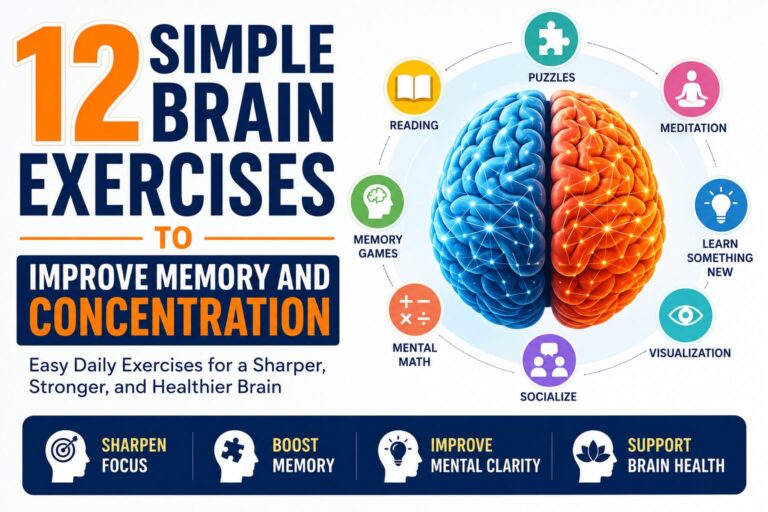
If you’re looking for more practical ways to strengthen your memory and concentration, don’t miss our guide on 7 Natural Ways to Improve Memory and Focus, where we share simple daily habits that complement a brain-friendly diet.
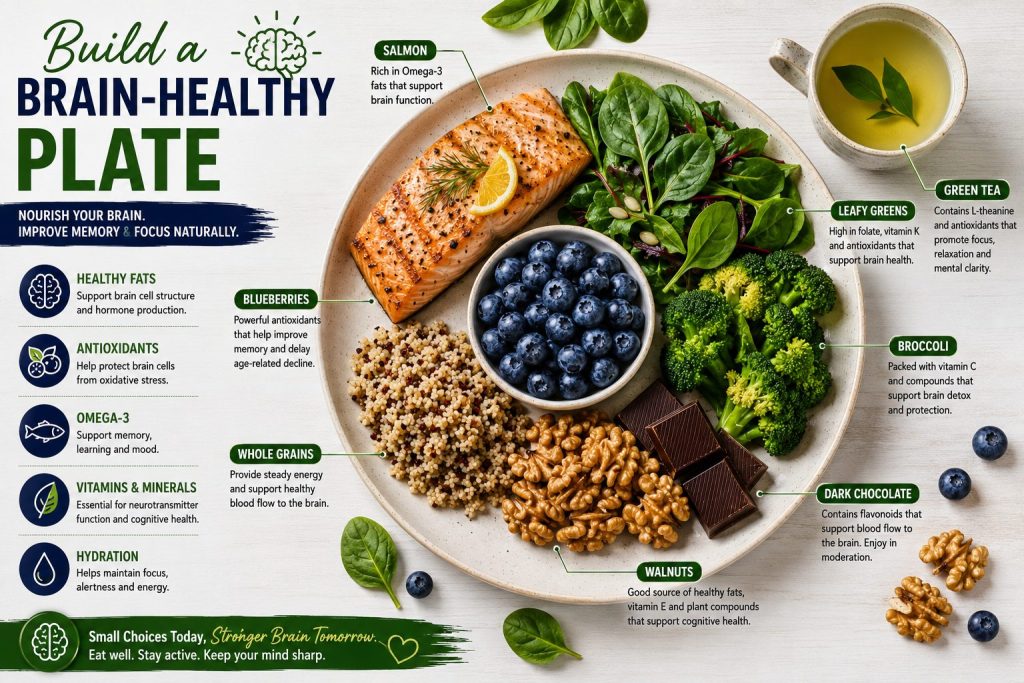
A Simple One-Day Brain-Healthy Meal Plan
Knowing the best foods for brain health is helpful, but putting them into practice is what really matters. Here’s an easy meal plan that combines many of the foods we’ve discussed.
Breakfast:
- Oatmeal topped with blueberries and chopped walnuts
- One boiled egg
- A cup of green tea
Mid-Morning Snack:
- A small handful of pumpkin seeds
- Fresh fruit such as an apple or orange
Lunch:.
- Grilled salmon with steamed broccoli
- Brown rice or quinoa
- Mixed green salad with olive oil dressing
Afternoon Snack:
- Plain Greek yogurt with fresh berries
- One or two small squares of dark chocolate (70% cocoa or higher)
Dinner:
- Grilled chicken or baked tofu
- Spinach and kale salad
- Roasted vegetables seasoned with turmeric and black pepper
Stay Hydrated:
Don’t forget one of the simplest habits for brain health—drink enough water throughout the day. Even mild dehydration can make it harder to concentrate and may leave you feeling tired.
Can Food Alone Improve Memory?
One of the most common questions people ask is whether changing their diet will instantly improve memory.
The honest answer is no. There isn’t one “magic food” that suddenly boosts memory or prevents forgetfulness.
Instead, brain health is influenced by many factors working together, including:
- Eating a balanced diet
- Getting enough sleep
- Exercising regularly
- Managing stress
- Staying mentally active
- Keeping chronic health conditions under control
Healthy eating should be viewed as one important part of an overall healthy lifestyle.
If you’ve been experiencing frequent forgetfulness, you may also find our article Why Do We Forget Things? Common Causes of Memory Problems helpful. It explains several everyday factors that can affect memory and concentration.
Should You Consider Brain Training Programs?
A healthy diet should always be your foundation.
However, some people also enjoy brain-training exercises or structured cognitive programs as another way to challenge their minds.
If you’re interested in learning more, you can read our Neuro Energizer Review, where we take an honest look at one popular brain-training audio program, discussing what it offers, who it may suit, and the points to consider before making a purchase.
Remember, no program replaces healthy eating, regular exercise, quality sleep, and advice from a qualified healthcare professional when needed.
Frequently Asked Questions
There isn’t a single “best” food. However, fatty fish such as salmon are often highlighted because they provide omega-3 fatty acids, which are important components of the brain.
Blueberries are frequently recommended because they contain antioxidants and other beneficial plant compounds. Other fruits such as strawberries, oranges, and avocados can also be part of a healthy diet.
A balanced diet supports overall brain health, which may contribute to normal memory and concentration. However, no food can guarantee better memory on its own.
Yes. Eggs provide nutrients such as choline, vitamin B12, and protein that are important as part of a balanced diet.
Dark chocolate contains natural flavonoids and antioxidants. Enjoying small amounts as part of a healthy diet may be a better choice than sugary desserts.
Hydration needs vary from person to person depending on age, activity level, climate, and overall health. Drinking water regularly throughout the day is generally a good habit.
Whole foods should usually be the foundation of a healthy diet. If you think you may have a nutrient deficiency, it’s best to speak with a healthcare professional before taking supplements.
Leafy green vegetables, broccoli, and other colorful vegetables provide a variety of vitamins, minerals, and antioxidants that support overall health.
A diet high in highly processed foods and sugary drinks may contribute to energy fluctuations that can affect focus during the day. Choosing balanced meals can help support steady energy levels.
Healthy eating is a long-term habit rather than a quick fix. Consistency over weeks and months is more important than expecting immediate results.
Final Thoughts:
Your brain works hard every day, helping you think, learn, solve problems, and remember the moments that matter most. Just like the rest of your body, it deserves proper care and nutrition.
Adding the best foods for brain health to your daily meals doesn’t have to be complicated. Small changes—such as eating more fatty fish, leafy greens, berries, walnuts, and other nutrient-rich foods—can become part of a healthier lifestyle over time.
Beyond nutrition, regular physical activity, quality sleep, stress management, and staying mentally active all play an important role in supporting long-term brain health.
For even more practical tips, be sure to read our related guides:
- Why Do We Forget Things? Common Causes of Memory Problems
- 7 Natural Ways to Improve Memory and Focus
- Neuro Energizer Review: Is This Brain Training Audio Program Worth It?
Together, these resources can help you better understand your brain and discover practical ways to support memory, focus, and overall cognitive well-being.