
Introduction
Have you ever walked into a room and suddenly forgotten why you went there?
Or maybe you’ve spent 20 minutes reading the same page without remembering what you just read.
If that sounds familiar, you’re not alone.
Most people experience memory lapses or difficulty concentrating from time to time. A busy lifestyle, lack of sleep, stress, poor eating habits, and constant distractions can all affect how well your brain works.
The good news is that improving your memory and focus doesn’t always require medication. In many cases, small changes to your daily routine can make a noticeable difference over time.
In this article, you’ll discover 7 natural ways to improve memory and focus using simple habits that anyone can follow. These tips are practical, easy to understand, and can become part of your everyday life.
Remember, improving brain health isn’t about finding one magic solution. It’s about building healthy habits that support your mind every day.
Why Do Memory and Focus Matter?
Your brain is involved in almost everything you do.
Whether you’re studying, working, driving, cooking, or simply having a conversation, your ability to remember information and stay focused plays an important role.
When your memory and concentration improve, everyday tasks often become easier.
Better focus may help you:
- Finish work more efficiently.
- Learn new skills faster.
- Stay organized.
- Make better decisions.
- Feel more confident in daily life.
That’s why taking care of your brain is just as important as taking care of your body.
What Can Affect Your Memory?
Before looking at solutions, it helps to understand why memory problems happen in the first place.
Some of the most common causes include:
Lack of Sleep
Poor sleep makes it harder for your brain to store and recall information.
Constant Stress
High stress levels can make concentrating difficult and leave you feeling mentally exhausted.
Poor Diet
Your brain needs nutrients to work properly. Eating too many processed foods and not enough whole foods may affect cognitive health over time.
Too Many Digital Distractions
Phones, social media, and constant notifications make it difficult to stay focused on one task.
Lack of Physical Activity
Regular exercise improves blood flow throughout the body, including the brain.
The good news is that many of these factors can be improved through simple lifestyle changes.
1. Get Enough Quality Sleep
If there’s one habit that has the biggest impact on brain health, it’s sleep.
Many people think they can function well after only four or five hours of sleep, but the brain needs enough rest to recover and process information.
While you’re sleeping, your brain organizes memories and strengthens the connections between brain cells.
Without enough sleep, you may notice:
- Difficulty concentrating
- Forgetfulness
- Mental fatigue
- Slower thinking
Most healthy adults should aim for 7 to 9 hours of quality sleep each night.
Tips for Better Sleep:
- Go to bed at the same time every night.
- Avoid using your phone before bed.
- Keep your bedroom cool and quiet.
- Reduce caffeine later in the day.
Improving your sleep is one of the easiest ways to improve memory naturally.
2. Eat Brain-Friendly Foods Every Day
Your brain uses a lot of energy throughout the day.
Just like a car needs good fuel, your brain performs better when you eat nutritious foods.
A healthy diet can support brain health, improve concentration, and help maintain good cognitive function.
Some excellent foods for brain health include:
- Blueberries
- Walnuts
- Salmon
- Eggs
- Spinach
- Broccoli
- Pumpkin seeds
- Avocados
These foods contain healthy fats, vitamins, minerals, and antioxidants that support overall brain function.
Instead of trying a strict diet, focus on eating a variety of whole foods every day.
Small improvements in your diet can have long-term benefits.
3. Stay Active and Exercise Regularly
Exercise isn’t only good for your heart and muscles.
It also benefits your brain.
Physical activity increases blood flow, delivering oxygen and nutrients that help your brain work efficiently.
Research has shown that regular exercise can support learning, memory, and concentration.
You don’t need an expensive gym membership.
Simple activities like:
- Walking
- Cycling
- Swimming
- Yoga
- Dancing
Above mentioned can all contribute to better brain health. Aim for at least 30 minutes of movement most days of the week. Not only will your body thank you, but your brain will too.
4. Keep Your Brain Active Every Day
Have you ever heard the saying, “Use it or lose it”? While it’s a simple phrase, there’s some truth behind it.
Your brain enjoys learning new things. When you challenge yourself regularly, your mind stays active and engaged.
The good news is that you don’t need difficult puzzles or expensive courses.
Simple activities can help keep your brain busy.
Try things like:
- Reading a few pages of a book every day
- Learning a new recipe
- Solving crossword or Sudoku puzzles
- Playing chess or strategy games
- Learning a new language
- Practicing a musical instrument
Even changing your daily routine can encourage your brain to think differently. The goal isn’t to become a genius overnight. It’s simply to keep your brain active.
5. Learn How to Manage Stress
Everyone experiences stress. A little stress from time to time is normal, but when stress becomes part of everyday life, it can affect your memory and concentration.
Have you ever noticed that it’s harder to think clearly when you’re worried?
That’s because stress can make it difficult for your brain to focus on the task in front of you. Fortunately, there are simple ways to reduce stress naturally.
Some ideas include:
- Taking a short walk outside
- Deep breathing exercises
- Meditation
- Listening to relaxing music
- Spending time with family or friends
- Taking regular breaks during work
Even ten or fifteen minutes each day can help you feel calmer and improve your mental clarity.
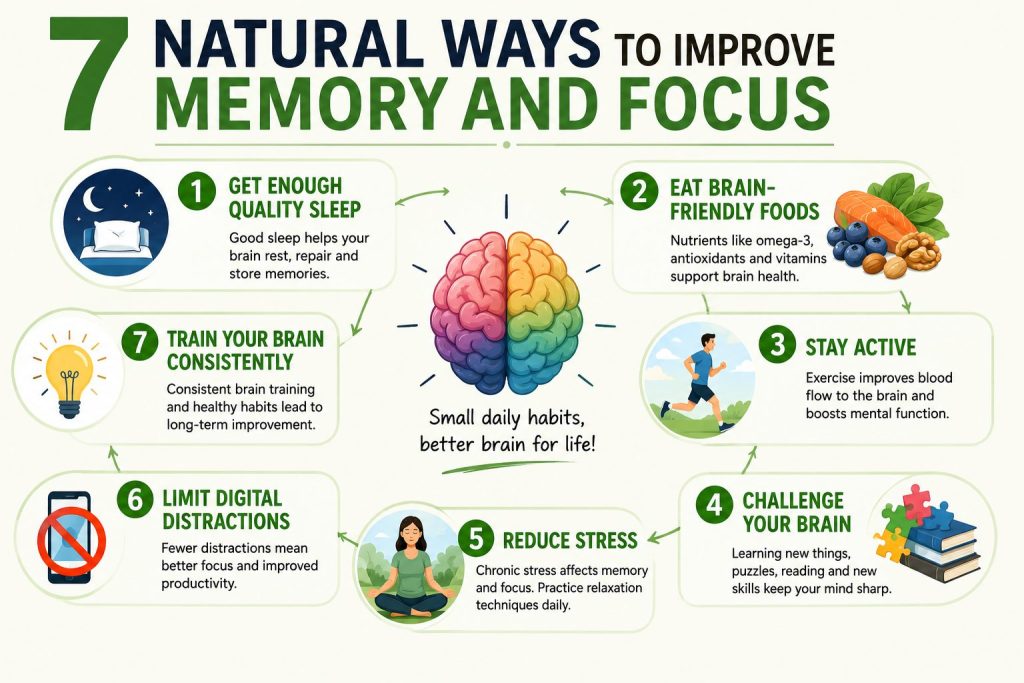
6. Reduce Digital Distractions
Our brains are constantly interrupted, when phones vibrate, emails arrive and social media notifications appear every few minutes.
It’s no surprise that many people struggle to stay focused.
Every time you stop what you’re doing to check your phone, your brain needs time to refocus.
Over time, these small interruptions can reduce productivity and make it harder to remember information.
Here are a few simple ways to stay focused:
- Turn off unnecessary notifications.
- Put your phone away while working.
- Work on one task at a time.
- Take short breaks every hour.
- Create a quiet workspace.
These small changes can help **improve focus and concentration** without making your day more complicated.
7. Build Healthy Brain Habits and Stay Consistent
Many people look for a quick solution to improve memory. Unfortunately, there isn’t one. Your brain becomes stronger through consistent healthy habits.
Sleeping well one night won’t completely solve memory problems. Eating one healthy meal won’t suddenly improve concentration.
The real progress comes from repeating good habits every day. Think about your brain the same way you think about physical fitness. You wouldn’t expect to become fit after one visit to the gym. The same idea applies to your mind. Small daily improvements often lead to better results over time.
Some people also enjoy using structured brain-training programs as part of their daily routine.
If you’re interested in learning more about one such program, you can read our detailed Neuro Energizer Review, where we explain how the program works, its features, pros, cons, and whether it’s worth considering.
While no digital program can replace healthy lifestyle habits, some people find that adding structured mental exercises helps them stay consistent.
Common Mistakes That Can Hurt Brain Health
Sometimes we focus so much on what we should do that we forget about the habits we should avoid.
Here are a few common mistakes that may affect your memory and focus over time.
Skipping Sleep
Regularly sleeping for only a few hours leaves your brain tired and less able to process information.
Eating Too Much Processed Food
A diet high in sugary snacks and heavily processed foods may leave you feeling tired and less focused.
Sitting All Day
Your brain benefits from movement just as much as the rest of your body. Try to stand up and move around every hour.
Trying to Do Too Many Things at Once
Multitasking often reduces productivity rather than improving it. Focusing on one task at a time usually leads to better results.
Ignoring Stress
Many people accept stress as a normal part of life. However, learning to manage stress is an important part of maintaining long-term brain health.
Small Changes Can Make a Big Difference
One reason people give up on healthy habits is because they try to change everything at once.
Instead, choose one habit this week. Maybe you’ll go to bed 30 minutes earlier. Maybe you’ll take a short walk after dinner. Or perhaps you’ll spend less time scrolling on your phone.
Small improvements may not seem exciting, but they often become the habits that last the longest. Remember, improving your memory isn’t about being perfect. It’s about becoming a little better each day.
Frequently Asked Questions
Yes, in many cases it can.
Healthy habits like getting enough sleep, eating nutritious foods, exercising regularly, managing stress, and staying mentally active can all support better memory over time. However, if you notice sudden or severe memory problems, it’s important to speak with a qualified healthcare professional.
Yes.
Regular physical activity improves blood circulation throughout the body, including the brain. Many people find that staying active helps them feel more alert, improves concentration, and supports overall mental wellbeing.
Everyone is different.
Some people notice positive changes within a few weeks after building healthier habits, while others may take longer. The key is consistency rather than expecting immediate results.
Some foods that support brain health include:
Blueberries
Walnuts
Salmon
Eggs
Leafy green vegetables
Pumpkin seeds
Avocados
Eating a balanced diet with a variety of whole foods is one of the easiest ways to support cognitive health.
Some people enjoy using brain-training programs as part of their daily routine.
While these programs shouldn’t replace healthy habits or professional medical care, they may complement a healthy lifestyle for people interested in structured mental exercises.
If you’re curious about one such program, you can read our detailed Neuro Energizer Review, where we explain how it works, what it includes, its pros and cons, and who it may be suitable for.
Final Thoughts
Your brain works hard every single day.
It helps you solve problems, remember important moments, make decisions, learn new skills, and stay productive. That’s why taking care of your brain deserves just as much attention as taking care of the rest of your body.
The good news is that you don’t need to make dramatic lifestyle changes overnight. Simple habits like getting enough sleep, eating nutritious foods, exercising regularly, reducing stress, and keeping your mind active can make a real difference over time.
The most important thing is to stay consistent. Choose one habit from this article and start today. Once it becomes part of your daily routine, add another. Small improvements often lead to lasting results.
Your future self will thank you for taking the first step toward better brain health.